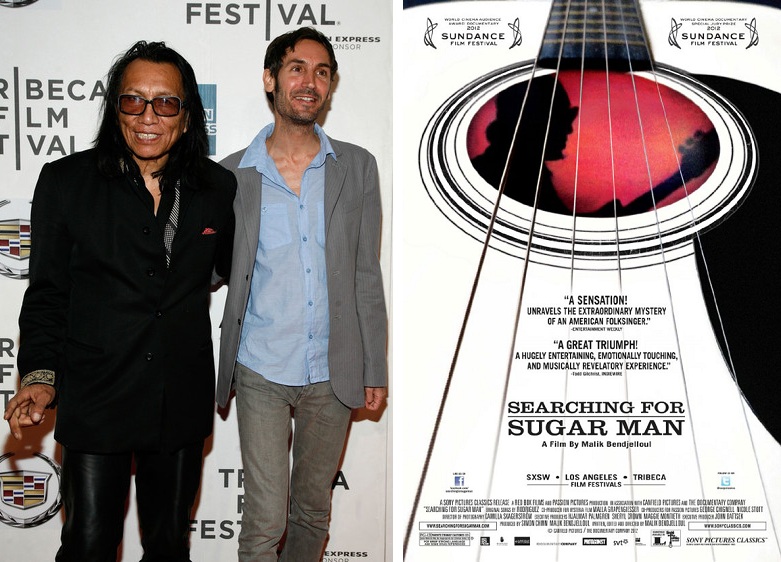
 At first the documentary Searching for Sugar Man feels like a music-industry murder mystery, but it turns out to be a much more interesting and uplifting story of the power of song and life’s odd twists, turns, and surprising renaissances.
In the late ’60s and early ’70s Detroit singer-songwriter Sixto Rodriguez recorded two albums of Dylanesque protest folk-rock, but despite the dedication of his producers and acclaim from critics, the works, Cold Facts and Coming in From Reality, vanished from the charts. Soon so did Rodriguez–not only did he drop out of the music industry, but rumors eventually spread that the mysterious musician had died, even committed suicide on stage by self-immolation.
Though it remained unknown in America, in the ’70s Rodriguez’s music and the mystery of his disappearance and supposed death made their way to South Africa. There, by way of bootlegged albums (protest songs were often censored by the South African Apartheid government), the music spoke to and inspired a generation of white South Africans and musicians. So much so that in the late 1990s several South African Rodriguez fans went digging on the Internet to find out the true story about their musical hero.
They found him alive and well, still living in Detroit, working in day-labor construction. In 1998 Rodriguez traveled to South Africa and performed a series of concerts for huge crowds of (until then unknown to him) adoring fans, and has regularly returned since for more shows.
About five years ago, Swedish documentary maker Malik Bendjelloul heard the strange and ultimately heart-warming story of Rodriguez’ South African comeback and began making Searching for Sugar Man (the title is taken from Rodriguez’s signature song, 1970’s “Sugar Man.”) This year the film won the Special Jury Prize and the Audience Award for best international documentary at Sundance.
I sat down in Chicago last month with Rodriguez and Bendjelloul to talk about the film and the musician’s unlikely 40-year journey.
Searching for Sugar Man is currently playing in select cities.
______
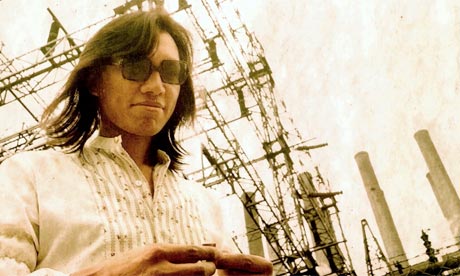 It was 25 years between your disappearance from the music scene and your reemergence with the South African concerts. And now 15 years later this film could give you a new high profile in America. How does this third go-around feel?
Rodriguez: It seems to happen to me in these kinds of cycles. Complete strangers pick me up. With South Africa it was “Sugar” Segerman and Brian Currin and Craig Bartholomew-Strydom, they decided to find me. Sugar got a hold of my daughter Eva, and she told me, and so I called Sugar in 1998, so that’s when I surfaced.
In ’03 Light in the Attic Records picked up and reissued my album, then I met Malik in ’08. Malik was well into the research and production of the film when I met him. These three strangers and then Malik decided to find me, and they certainly have changed my life. Now I’m surrounded by all these young bloods with their questions and interests and ideas.
Malik, you’d completed a lot of the film before you ever met Rodriqiez. After spending so much time researching his story, what were you thinking when you first met him?
Malik Bendjelloul: I heard so much about him, so I was nervous and eager. People described him in almost surreal ways: This drifter who was always roaming the streets in his black clothes, his guitar on his back.
Rodriguez: It’s easy to match—you can’t go wrong with all black. [Laughs]
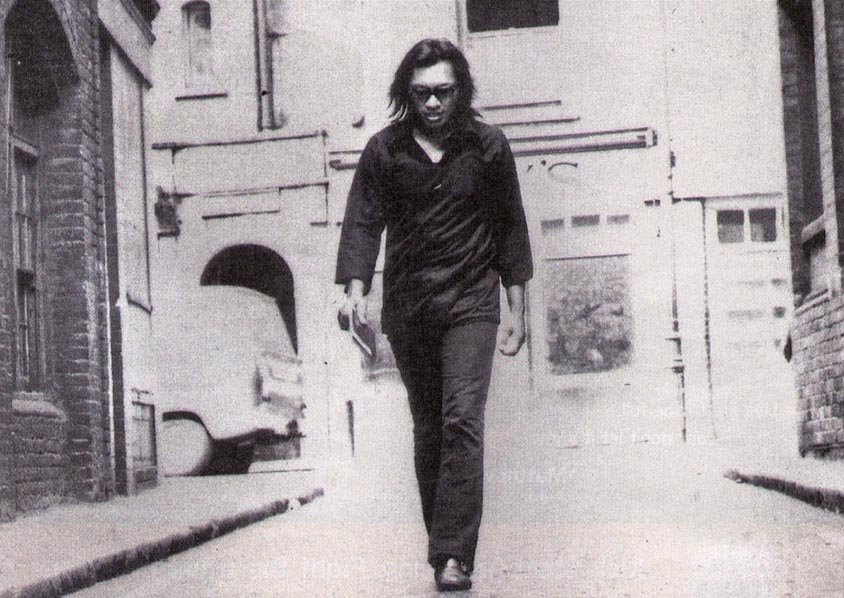 The first part of the film where you tell Rodriguez’ story in the ‘60s and early ‘70s has a very moody, darkly romantic, almost mythological feel to it.
Bendjelloul: Myths are beautiful—you can speculate and fantasize and illuminate these myths. It als shapes how the film looks—you have this mystery imagery, all these beautiful shots. And the music is so good and almost sounds like a soundtrack. But when I was making the film, some people said Rodriguez should remain a mystery to his fans.
Rodriguez, were you working in the ‘60s to create that air of reclusive, street-poet mystery? Because it turns out you’re an incredibly warm and open guy.
Rodriguez: Maybe the shades do it. [Laughs] But I’m not a mystery.
In 1998 you re-emerged and started playing for South African audiences. How was that in terms of the connection between performer and audience, to be playing for these huge crowds of people halfway around the world who, unbeknownst to you, had been so into your 25-year-old music for so long?
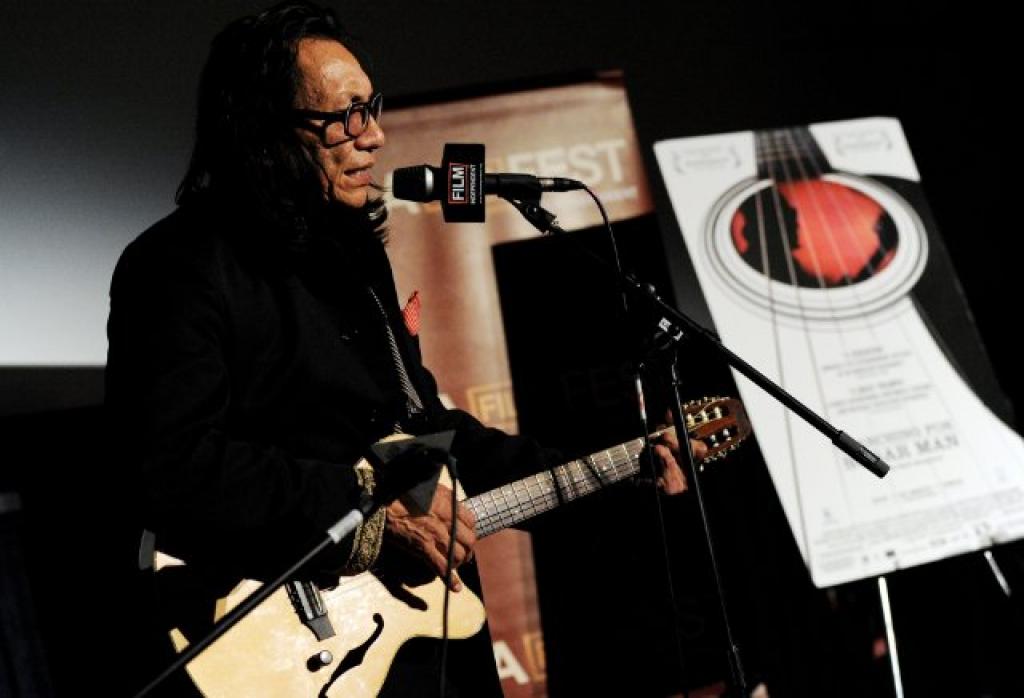
Rodriguez: I wasn’t prepared for all the grandeur. It’s very much is an honor and a privilege. I knew it was genuine because they knew the lyrics. Pretty soon I was becoming a band leader up there on the stage, conducting these thousands of people singing along with me. It’s so gratifying.
 The emotional core of the film is Rodriguez’ powerful personal story, but the film also illuminates the role and cultural impact of American pop culture.
Bendjelloul: America is very much about changing the world and promoting and exporting ideas to other places without even knowing about. It’s change by remote control—without even knowing where he was aiming, Rodriguez changed a society in a real way.
Rodriguez, forty-some years ago you were writing about America and particularly the Detroit street scene. Why do you think your music from that time resonated so deeply with South Africans?
Rodriguez: I was in the middle of the Vietnam protest era with kids burning their draft cards, going to Canada, and demonstrating against the war. That photograph at Kent State still resonates with me. I was listening to Neil Young’s “Ohio,” Barry McGuire’s “Eve of Destruction, Paul Simon’s “I Am a Rock,” and all the songs of that time dealing with the assassinations of Bobby Kennedy and Martin Luther King. And in South Africa, the young whites who opposed Apartheid were dealing with the same kinds of things.
 Your music also resonates across today’s world, with events like America’s post-9-11 wars and the Arab Spring.
Rodriguez: I’ve done the ‘40s, ‘50s, ‘60s, ‘70s, ‘80s, ‘90s, ‘00s, and now I’m working on the ‘10s. And I’ve learned education isn’t just education; it’s also enlightenment, too, though the enlightenment takes a little longer. Terror and force keep the people scared, but I like what Franklin Delano Roosevelt said: The only thing you have to fear is fear itself.
Ultimately this film is a very uplifting, inspiring story, almost a Cinderella fairy tale.
Rodriguez: At least it wasn’t Sleeping Beauty! [laughs] I knew exactly where I was, I wasn’t lost at all.
 Hammer & Thump
From everything that I have seen and read this film looks amazing! And it sounds amazing, too! I’ve been listening to the soundtrack album stream on http://huff.to/OWSbC1 and I really like what I hear! Great story behind some amazing music.
LikeLike
He did well in Australia long before his revival in S Africa. The movie omits this cold fact.
LikeLike